
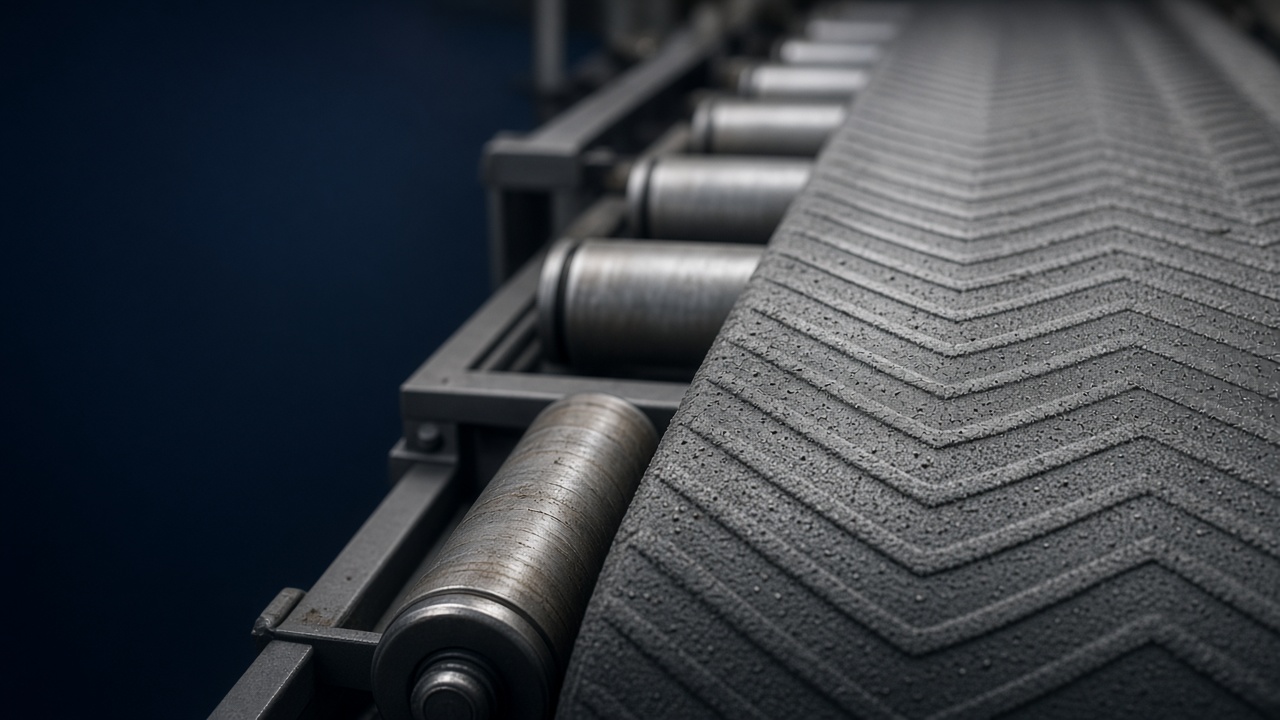
Conveyor scrapers are the blade and plough hardware that scrape adhering material off the belt. Primary scrapers sit against the head pulley; secondary scrapers work on the flat belt after the pulley; V-ploughs and diagonal ploughs protect tail pulleys from material on the return belt. This page is about that hardware: geometry, tensioning, blade material and whether mechanical fasteners can pass the tip. The Belt Cleaners page is the system and strategy view of carryback control. Use both if you need a full cleaning arrangement; use this page when you are replacing frames, blades or ploughs as components.
Part of the Conveyor Knowledge Centre. Research the duty first, then request a quote when you are ready to brief suppliers.
A scraper only works if the mount is rigid, the blade angle and tip pressure are right, and the tip suits the belt cover and any fasteners. Chatter and skip leave streaks of carryback; excessive pressure grooves the cover. Polyurethane tips are common on general duty; tungsten carbide appears on highly abrasive or high-speed belts — choose from duty and fastener compatibility, not from a brochure hardness rating.
Reversible belts need dual cleaner geometry or tips that can work in both directions. Mechanical belt fasteners can forbid some carbide systems because the tip will destroy the clip and itself. V-ploughs ahead of the tail pulley are a different device from a head primary: they deflect tramp on the return run so it is not nipped into the tail pulley and lagging.
Plant language often says “scrapers” and “cleaners” interchangeably. On Conveyor Quotes, scrapers means the blades, mainframes, tensioners and ploughs. Belt cleaners means the carryback-control package and how primary, secondary and tertiary devices work with chute sealing. If you only know you have a dirty return belt, start with Belt Cleaners and still list scraper hardware in the notes.
Common applications
Scrapers are fitted on new belts, retrofitted under dirty returns, and replaced when blades or frames wear out. Hardware scopes include:
- Primary head scrapers — First cut of coarse carryback at the discharge pulley. Needs space in the head chute and a stiff mount — thin chute walls chatter and look like a “bad blade”.
- Secondary scrapers — Fines removal on the flat belt after the pulley. Sticky coal and concentrates often need this stage even when the primary looks aggressive.
- V-ploughs and return ploughs — Deflect material riding on the return belt before the tail pulley. A frequent protection for lagging on mine conveyors, distinct from head-pulley blades.
- Reversible-belt scraper sets — Cleaning in both directions. Geometry and tensioners must be described; a one-way primary will not behave on a reversing feeder.
Industries that use this equipment
Mining, coal handling, quarries, cement and ports install scraper hardware on nearly every troughed belt because abrasive or sticky product adheres past the head pulley.
Mpumalanga coal and Northern Cape ore duties punish soft tips; coastal terminals add corrosion on frames, springs and fasteners.
Process plants with sticky powders need careful tip selection to avoid smearing — still a hardware choice, not a full plant cleaning philosophy.
Package-handling warehouses rarely need mine-style scrapers; say if you actually mean a bulk belt, or you will be quoted the wrong device.
Specifications buyers should consider
The list below is a briefing checklist, not a datasheet. Exact ratings, dimensions and standards must come from the duty, existing plant records and the supplier quotation — do not treat generic web copy as a specification.
- Which device: primary, secondary, tertiary, V-plough, diagonal plough, or a combination — named, not “a scraper”.
- Belt width, belt speed if known, and head pulley diameter for primary geometry.
- Belt direction: one-way or reversible.
- Presence and type of mechanical fasteners, or confirmation that the belt is vulcanised endless.
- Product: wet coal, clayey ore, dry abrasive rock, sticky concentrate — qualitative, not a made-up abrasion index.
- Mounting space and photos of the head chute or return belt at the tail.
- Whether you need mainframe, tensioner and blades, or tips only for an existing frame.
- Corrosion: wash-down, coastal, underground — painted mild steel seizes.
Factors that affect selection
- Fastener compatibility is a hard constraint for carbide tips; say if clips are in the belt.
- Mounting steel must be rigid; a cheap blade on a floppy chute wall will chatter.
- Tip change access and local cartridge availability often matter more than frame cosmetics on continuous plants.
- Reversing conveyors are a different layout, not a second identical primary bolted backwards without thought.
- Ploughs protect the tail; they do not replace a primary at the head.
- If carryback is a plant-wide housekeeping problem, pair this hardware brief with the Belt Cleaners strategy page and with skirt/chute work.
Common problems and failure considerations
- Streaks of carryback from chatter, worn tips or a frame hung off thin plate.
- Cover grooving from over-tension or a tip incompatible with the cover.
- Carbide systems destroyed by mechanical fasteners, and fasteners ripped out in turn.
- Tail pulley lagging damaged because no plough was fitted on a dirty return belt.
- Reversible belts leaving a smear in one direction.
- Buying a new primary when the real constraint is no space in the head chute — a chute job.
Maintenance considerations
- Inspect tip wear and tension on a defined interval; slack scrapers are a labour cost in shovelling, not a saving.
- Change tips before the frame or belt cover takes the wear.
- Keep tensioners free of packed fines so the blade can move.
- After a new splice or fastener installation, confirm the scraper is still compatible and has not been left hard against a step.
- Corrosion-seized springs and slides should be replaced, not hammered.
- Walk the return belt for material that a plough should have intercepted before it reaches the tail pulley.
Questions buyers should ask suppliers
- Is this a complete primary/secondary/plough assembly or replacement blades for our existing mainframe?
- What tip material do you propose given our product and fastener situation?
- Can the primary physically fit in this head chute, and what bracket steel is included?
- How is tension applied, and are spare tips stocked in South Africa for this cartridge?
- What arrangement do you use on reversible belts?
- Are stainless or coated components included for our wet or coastal site?
- Should we also be briefing Belt Cleaners as a system, or is this a like-for-like hardware swap?
What to include when requesting a quote
Clear briefs produce comparable quotations. Include what you know, and mark estimates separately from measured values. Photos and drawings help more than extra adjectives.
- Device type and location: primary at head, secondary, V-plough, reversing set.
- Belt width, pulley diameter, photos of mount space.
- Fasteners present or vulcanised belt.
- Product and wet/dry duty; seasonal change if relevant.
- Tips only versus full frame and tensioner.
- One-way or reversible.
- Related chute or cleaner-system work in the same request if space or strategy is the issue.
- Site location and shutdown window for installation.
Related conveyor information
Related components: cleaners, pulleys, belting, skirt rubber.
Guides: Industrial Conveyor Maintenance Guide, Belt Tracking and Splice Basics.
Resources: Conveyor maintenance guide.
Frequently asked questions
Scrapers versus belt cleaners — which category should I tick?
Tick Conveyor Scrapers when you are buying or replacing blade and plough hardware: primaries, secondaries, V-ploughs, frames and tips. Tick Belt Cleaners when you want a carryback-control approach — which stages, how they work with the chute, and service support. Many plants tick both and say “hardware at the head plus advice on the cleaning arrangement” in the notes.
Can I use a carbide primary on a belt with mechanical fasteners?
Often no. Many carbide tips are damaged by clips and will damage the fastener in return. Always state fastener type. A vulcanised belt removes that constraint but does not automatically mean carbide is the right tip for your cover and product.
Why does our new scraper still leave carryback?
Common causes are a flexible mount, wrong angle, worn or glazed tips, a reversing belt with one-way geometry, or a head chute that will not let the blade sit on the pulley. Sticky product may also need a secondary. Photos of the mount and belt path are more useful than asking for a “stronger” scraper without describing the geometry.
Do V-ploughs replace head scrapers?
No. A V-plough or return plough protects the tail pulley from material on the return belt. A primary scraper works at the discharge pulley. Plants with dirty returns often need both, for different reasons. List each device separately on the quote request.