
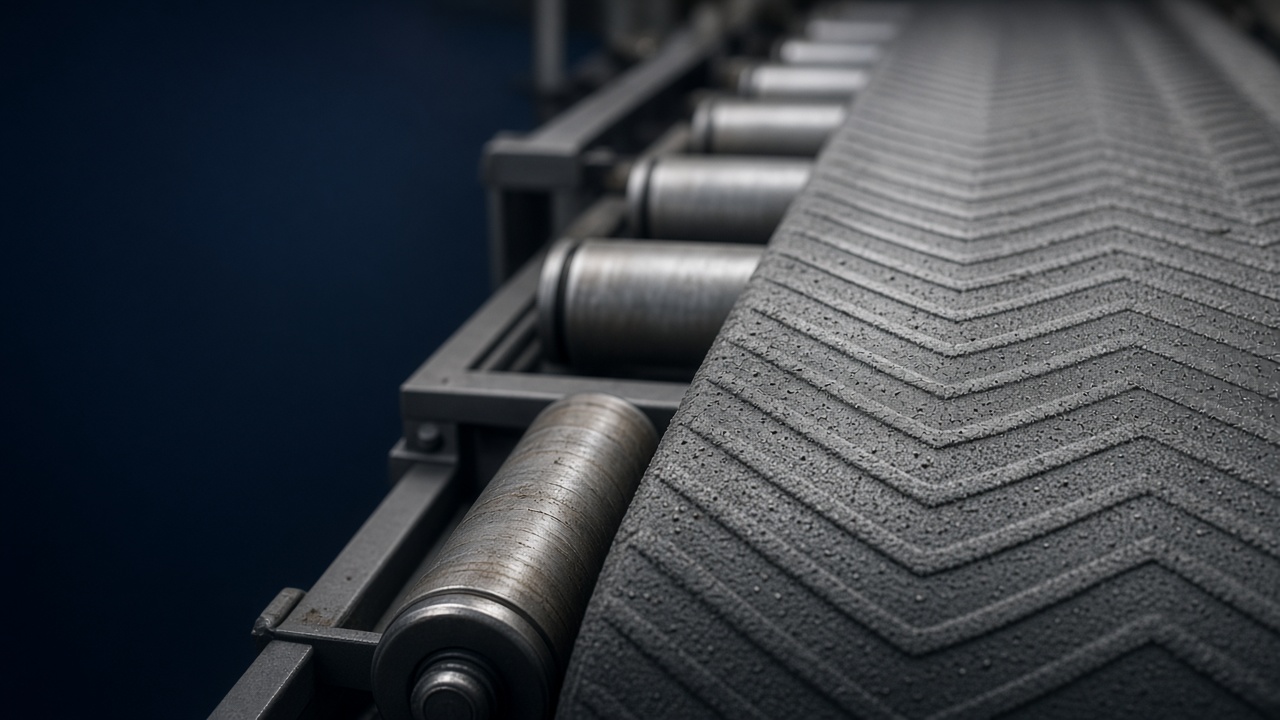
Vulcanising joins conveyor belt ends into an endless loop using heat and pressure (hot vulcanising) or chemical adhesives (cold bonding). Done correctly, a splice can approach the parent belt’s rated strength. Mechanical fasteners are a different method, covered on their own page. Vulcanising is a service, not a catalogue product on the quote form: select Belting, then describe splice labour, method and shutdown window in the notes so crews and belt suppliers can respond together.
Part of the Conveyor Knowledge Centre. Research the duty first, then request a quote when you are ready to brief suppliers.
Hot crews bring presses, cooling, knives and splice kits sized to belt width and carcass type. Steel-cord belts need different procedures from fabric-ply belts. Cold bonding uses chemical adhesives where hot-work permits are restricted or the belt type is suitable. Weather protection, a stable power supply and a flat, clean work area affect quality as much as technician skill. Cure time must fit the outage, not the other way around.
Typical work is new-belt installation splices, insert sections after a rip, conversion of a mechanical joint to a vulcanised splice, and planned replacement of ageing joints on long belts. Some crews also bond pulley lagging as related hot-work; say if that is in the same window. Overland conveyors may need more than one joint or staged crews.
This is not a tick-box API product on Conveyor Quotes. Buyers still get value by writing a clear service brief. Choose Belting on the form, attach belt identification (width, carcass, cover), and state “hot splice”, “cold bond”, number of joints, site access and whether belt supply is included. If you only need clips for an emergency restart, use Mechanical Joints instead.
Common applications
Splicing is scheduled around production, not around a workshop calendar. Common reasons to call a vulcanising crew include:
- New belt installation — Endless the belt on the conveyor after pulling the roll. Confirm press size, number of splices and whether old belt removal is in the same contract.
- Emergency rip repair — Insert a section or patch to restore operation. Photos of the damage and whether the conveyor can be isolated with space for the press decide if a vulcanised repair is even possible in the window.
- Planned splice replacement — Renew joints before fatigue failure on long plant or overland belts. Consistency across multiple splices matters as much as skill on any single joint.
- Cold bond work — Used where hot-work permits are difficult, or for suitable fabric belts. Still needs cleanliness, clamp pressure and full cure before tension is applied.
Industries that use this equipment
Surface and underground mining is the core market for vulcanising crews in South Africa, because high-tension fabric and steel-cord belts are production-critical.
Cement, coal handling, quarries and ports schedule splices around vessel, kiln or crushing windows; travel and standby to remote Northern Cape or Limpopo sites should be visible in the offer.
Process plants and sugar mills often splice on seasonal or annual shutdowns where weather protection and power quality still have to be planned.
Warehouse package belts less often need hot vulcanising; they may still use cold bond or mechanical fasteners — do not assume a mine-style press crew is the right response.
Specifications buyers should consider
The list below is a briefing checklist, not a datasheet. Exact ratings, dimensions and standards must come from the duty, existing plant records and the supplier quotation — do not treat generic web copy as a specification.
- Belt type: fabric ply or steel cord, width, rating as marked on the belt or from drawings — do not guess a rating.
- Method: hot vulcanising, cold chemical bond, or you want the supplier to recommend based on duty and permits.
- Number of splices, whether the belt is new or a repair in place, and insert length if a section is damaged.
- Site: surface or underground, suburb or mine name, induction, flameproof or hot-work permit rules.
- Power, lighting, weather shelter and whether the splice zone is at the head (cramped chute) or along the gallery.
- Shutdown start and the latest safe restart, including cure time — not only “fit the press”.
- Whether belt supply, old-belt disposal, lagging bond or mechanical-fastener removal are included.
- Quality records you expect: temperature, pressure and cure log per joint.
Factors that affect selection
- Critical high-tension belts on mines often justify hot splices; emergency clips are a restart tactic, not always the permanent joint.
- Steel-cord procedures are not interchangeable with fabric-ply kits — wrong materials are a planned failure.
- Crew size, press width and access through underground or plant doors can make an otherwise capable contractor unable to start.
- Remote sites incur travel and standby; those should be line items, not a surprise day-rate after the outage starts.
- If you need belt and splice in one outage, say so. Split responsibility between a roll supplier and a crew is workable only with a clear interface.
- Cleaner and scraper compatibility after a new splice still matters — a bulky mechanical joint left in the belt may forbid some carbide tips; a flush vulcanised joint does not.
Common problems and failure considerations
- Splices pulled out or opened at the edges because cure was cut short, the belt was dirty, or tension was applied too soon.
- Rain on an unsheltered outdoor splice ruining adhesives and blowing the restart.
- Press that will not fit at the head chute, with no alternative splice station planned.
- Mixing mechanical fasteners and a later hot splice without removing clips cleanly, leaving a weak step in the carcass.
- No documented cure records, so a later failure cannot be investigated.
- Briefing only “need vulcanising” on a form that has no such product — suppliers never see the labour scope.
Maintenance considerations
- Inspect splices on walkdowns for edge lift, bubbles, wear faster than the parent belt, or catching on structure.
- Plan splice replacement before the joint becomes the weakest point on a long overland belt.
- Keep a clear, level work area and weather cover in the shutdown plan, not as a crew improvisation.
- After a new splice, confirm cleaners and ploughs are compatible and retensioned.
- Record which joints are vulcanised versus clipped so future RFQs are accurate.
- For standing emergency response, agree induction and access in advance rather than negotiating while the belt is down.
Questions buyers should ask suppliers
- Hot or cold method for this carcass, and what kit is included in the price?
- What press width and power do you bring, and where must we prepare the splice station?
- How do you record cure temperature and pressure?
- Is travel, standby, induction and after-hours work itemised?
- Can you splice steel cord and fabric, or only one?
- If we select Belting on the form, will you supply the roll, the labour, or both?
- What warranty assumptions apply if the belt is aged, oily or previously repaired?
What to include when requesting a quote
Clear briefs produce comparable quotations. Include what you know, and mark estimates separately from measured values. Photos and drawings help more than extra adjectives.
- Select Belting on the quote form; write vulcanising / splice labour clearly in the notes.
- Belt identification: photos of the markings, width, carcass type, length if known.
- Number of splices, new install versus repair, photos of damage.
- Hot versus cold, or ask for a recommendation with permit constraints.
- Site access, underground rules, power, shelter, cranage.
- Outage window including cure time.
- Whether mechanical joints must be removed first.
- Contact for permit-to-work and isolation.
Related conveyor information
Related components: belting, mechanical joints, cleaners, pulleys.
Guides: Belt Tracking and Splice Basics, Conveyor Belt Pricing South Africa.
Resources: How to request a conveyor quote, Conveyor maintenance guide.
Frequently asked questions
Why is vulcanising not a product I can tick on the quote form?
The live quote list is component and system categories such as Belting. Splicing is labour performed on that belt. Select Belting, then describe hot or cold splice, number of joints and the shutdown window in the notes so belt suppliers and crews can price supply and service against one brief.
Hot splice or cold bond?
Hot vulcanising is widely used on critical mine belts and steel-cord carcasses. Cold bonding can suit some fabric belts or sites where hot work is restricted. Give carcass type, tension duty in qualitative terms, and permit limits; do not treat the two methods as interchangeable kits.
When should I use mechanical joints instead?
Mechanical fasteners are useful for emergency restarts, certain light duties, or belts that must be opened regularly. They are not the same strength or cleaner-compatibility conversation as a vulcanised splice. Use the Mechanical Joints page for clips and hinge fasteners; use this page’s briefing notes when you want a chemical or hot splice.
What site conditions ruin a splice?
Dirt, moisture, inadequate power, a warped work surface, and restarting before cure. Cramped head chutes that cannot take the press are a planning failure, not a crew failure. State access and weather protection up front so the quotation includes shelter and a realistic station along the gallery if needed.