
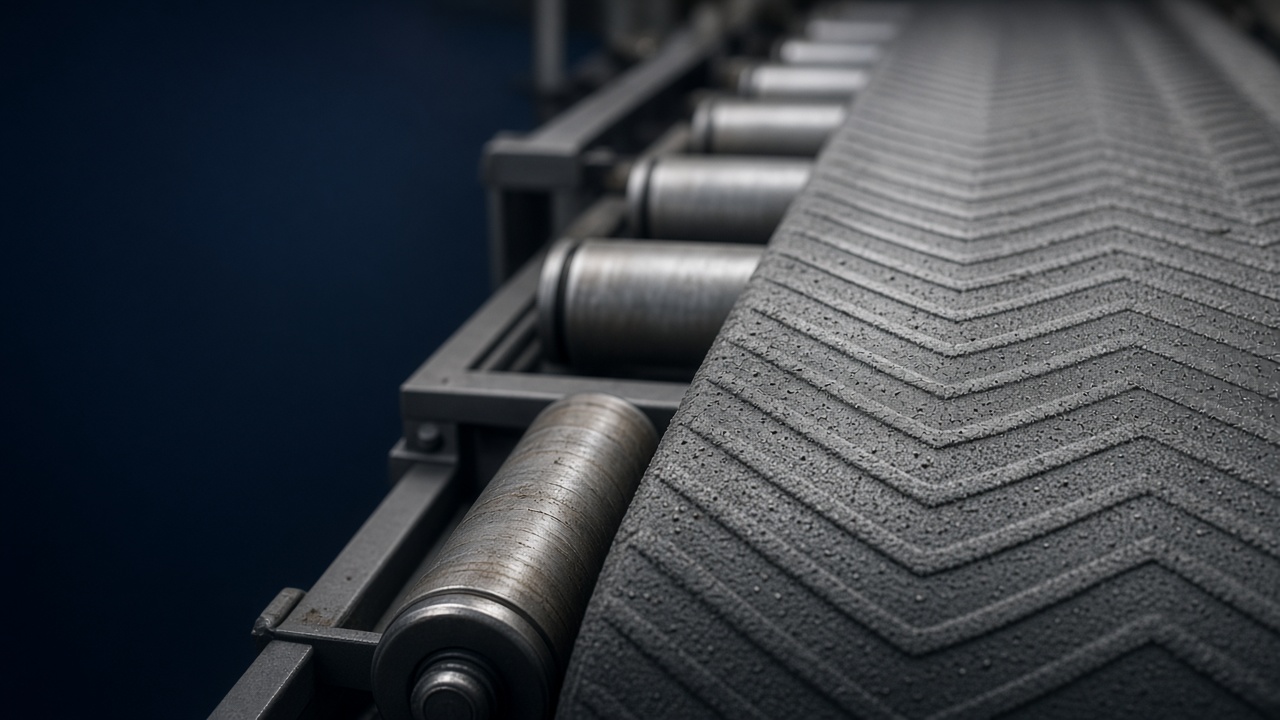
Idlers are the rollers that support the belt and its load. South African bulk plants consume large volumes of troughing, return, impact and training idlers because dust, fines and misalignment wear seals and shells continuously.
Part of the Conveyor Knowledge Centre. Research the duty first, then request a quote when you are ready to brief suppliers.
Carrying idlers form the trough under the loaded belt; return idlers support the empty belt; impact idlers or beds protect the belt at loading points; training idlers help tracking. Key variables include roller diameter, bearing type, seal design, trough angle (often 35° or 45° locally), frame style (inline, offset, garland) and whether rollers are steel, rubber-disc return or impact rings. CEMA or equivalent duty series should match belt speed, load and lump size as a classification concept — the correct series comes from the conveyor duty, not from copying a neighbour’s stock code.
Cheap rollers with weak seals fail early in wet, dusty transfer houses common on mines and wash plants. Seized idlers left in service groove the belt and raise power draw. State belt width, trough angle, roller diameter, shaft series and approximate quantities when requesting quotes, and note corrosive or sticky product — that changes shell and seal choices.
Rubber-disc returns shed sticky fines better than plain steel on many wet coal and clayey duties. Impact rings at chutes absorb loading energy that would otherwise bruise the carcass. If you are converting from garland to rigid frames, or changing trough angle, say so — frame geometry and roll length must change together or tracking problems follow the installation.
Common applications
Sites buy idlers for routine replacement programmes, emergency swaps after seized rollers burn the belt, and projects that extend or rebuild conveyors. Impact zones are upgraded when cover wear shows that spacing or ring design is wrong. Return training frames are added where belts mistrack toward structure.
- Carry-side troughing sets — Primary support under ore, coal or aggregate. Trough angle is often 35° or 45° locally and must match transition frames into the pulleys.
- Impact idlers at chutes — Absorb loading energy and protect the carcass. Wrong spacing or missing rings shows up as cover bruising rather than as an idler complaint.
- Return rollers — Including rubber-disc styles that shed sticky fines. Seized returns groove the running side of the belt and are a common fire and damage risk if ignored.
- Transition and training frames — Manage troughing into pulleys and correct wander. Training idlers are an aid, not a cure for structure that is out of line or chutes that load off-centre.
Industries that use this equipment
Open-pit and underground mines, coal handling plants, quarries, cement works and ports are the largest idler consumers. Smelters and sinter plants add heat and abrasive dust. Agricultural bulk stores and fertiliser depots need rollers that resist corrosion from product dust and coastal air where applicable.
Warehouse unit-load conveyors use different roller designs — often smaller diameters and different bearings — than troughed bulk idlers, so say which you need. Suppliers who serve mining houses understand the volumes and quality audits that come with framework agreements; smaller plants may prioritise fast delivery of common widths. Sticky products such as wet clay or certain concentrates often justify rubber-disc returns even when steel returns were historically used.
Specifications buyers should consider
The list below is a briefing checklist, not a datasheet. Exact ratings, dimensions and standards must come from the duty, existing plant records and the supplier quotation — do not treat generic web copy as a specification.
- Duty: troughing, return, impact or training, including frame style (inline, offset, garland).
- Trough angle, often 35° or 45° on local bulk conveyors, matching existing frames unless a conversion is planned.
- Belt width, roller diameter and shaft series from the current installation or the conveyor design.
- Seal and bearing arrangement suited to wet, dusty transfer houses rather than a light indoor duty.
- Shell type: steel, rubber-disc return, or impact rings at loading points.
- CEMA or equivalent duty series as a classification against belt speed, load and lump size — confirmed by the supplier against your duty, not assumed from a catalogue page.
- Corrosion or sticky-product notes that change coatings, discs and cleaning of returns.
- Quantities and whether the buy is a shutdown kit, consignment stock or a mixed emergency list.
Factors that affect selection
- Seal quality in wet, dusty South African transfer houses usually governs life more than shell thickness alone.
- Trough angle and transition design must stay consistent along the conveyor unless the whole geometry is being changed.
- Rubber-disc returns versus steel for sticky coal, clay or concentrate that would otherwise build on the shell.
- Impact spacing and ring design at chutes — belt cover damage is often an idler-layout problem.
- Change-out time: frame design and shaft series that crews can swap during a short stop.
- Volume and standardisation: mines with steady consumption may need compatible stock, not a one-off bargain roller.
Common problems and failure considerations
- Seized idlers groove the belt, raise power draw and can cause fires on the carry side in extreme cases.
- Weak seals let slurry into bearings; rollers then fail in clusters after rain or wash-plant spray.
- Mixing trough angles or roll lengths after a partial replacement creates tracking that no training idler will permanently cure.
- Impact zones left on ordinary troughing sets bruise covers and look like a belting defect.
- Steel returns on sticky product build fines until the belt lifts, mistracks or the roller seizes.
- Buying on unit price alone without comparing seal design multiplies labour as crews change rollers instead of doing higher-value work.
Maintenance considerations
- Walkdowns with infrared or acoustic checks catch failing rollers before a shutdown — seized shells should not wait for a planned outage if they are grooving the belt.
- Replace impact idlers as a set when cover wear at the load point shows the bed is spent.
- Keep returns clear of spillage; buried rollers fail regardless of seal quality.
- Do not use training frames to hide structure twist or off-centre chute loading.
- Record shaft series and frame type in stores so emergency swaps stay compatible.
- If converting garland to rigid frames, change roll length and geometry together and re-check tracking after the first loaded run.
Questions buyers should ask suppliers
- Which seal and bearing arrangement are you offering for our wet or dusty duty?
- Are these rollers compatible with our shaft series, frame style and trough angle?
- Do you recommend rubber-disc returns or impact rings for this product, and why?
- What duty series (CEMA or equivalent as a classification) are you matching to our speed and load?
- Can you support a shutdown quantity, and is consignment stock an option for ongoing mine demand?
- If we change trough angle or frame type, what else must change so tracking does not suffer?
What to include when requesting a quote
Clear briefs produce comparable quotations. Include what you know, and mark estimates separately from measured values. Photos and drawings help more than extra adjectives.
- Belt width, trough angle (often 35° or 45°) and roller diameter currently in service.
- Shaft series and frame style (inline, offset, garland) plus photos of a typical set.
- Breakdown of quantities: troughing, return, impact, training.
- Product type — abrasive, sticky, wet, corrosive — and indoor versus outdoor or underground.
- Whether this is routine replacement, emergency, or a geometry conversion.
- Preferred compatibility (existing brand or shaft series) if the plant standardises stock.
- Approximate annual consumption if known, for volume or consignment discussions.
- Delivery site and whether rollers must be palletised for underground or remote access.
Related conveyor information
Related components: pulleys, structure, chutes, belting, bearings.
Guides: Conveyor Idlers and Rollers: Selection and Failures, Industrial Conveyor Maintenance Guide.
Resources: Conveyor maintenance guide, Conveyor system cost guide.
Frequently asked questions
Why do so many South African plants use 35° or 45° troughing idlers?
Those trough angles are common local conventions for bulk belts: they balance carrying capacity, belt flexibility and transition into pulleys. They are not a rule for every conveyor. Changing angle on a live belt without changing frames, roll lengths and transitions usually creates tracking problems.
What does a CEMA series mean when we specify idlers?
CEMA (or an equivalent duty series) is a classification concept for matching roller construction to load, speed and lump size. Treat it as a briefing language so suppliers offer comparable duty — not as a guarantee copied from another site. Your belt width, speed and material still have to be stated.
When should we use rubber-disc return rollers?
When sticky fines would otherwise build on a steel shell — wet coal, clay and some concentrates are typical. Discs help the return belt shed material and reduce the chance of a seized roller grooving the cover. Dry, free-flowing product may still run satisfactorily on steel returns if seals are sound.
Why do seized idlers damage belts so quickly?
A stopped shell becomes a grinding surface. The belt cover is scored or grooved, power draw rises, and in severe cases heat builds on the carry side. Finding seized rollers on walkdowns is one of the clearest ways to protect the belt investment.